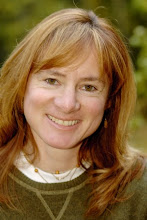
The first story I ever wrote – about an effort to build a school in a sister city overseas – appeared in 1991. I had been working at the regional newspaper for about a year and had worked my way from editorial assistant to full-fledged reporter, and I was shaking at the thought of my words going out for the whole world (well, at least about 90,000 southwest Virginia readers) to see.
All of a sudden I had gone from the relative anonymity of public service announcement writing, compiling wedding listings and school lunch menus to putting something out there that had my NAME on it, undeniably me, for better or worse.
It’s sort of like standing naked in front of a doctor, all vulnerable and nerve-wracking. Worse though, your critics are anonymous, letter-writing people who never have to make their jabs up close and personal, like a doctor.
That was some thousands of stories ago – I long ago stopped keeping track of the stories I’ve written – and it has definitely gotten easier. But there’s always a part of me that still quakes a little with every published piece.
And to be honest, I think that is as it should be. While I’ve gained a lot more confidence with my writing over the years, I also am keenly aware of my very “human-ness,” and the reality that mistakes will happen. It keeps me honest, one my toes, when writing, and that is probably a good thing.
It seems that no matter how hard one tries and no matter how meticulously one thinks they have worked on a story, there will be times that mistakes will happen.
They can, and do, happen to us all, and the degree of mistake varies as well. I’ve made errors ranging from the omission of a letter that creates a misspelling (“She hats that soup” vs. “She hates that soup”) to the misspelling of a name (an egregious mistake because Rule No. 1 in journalism is “Always doublecheck spellings of names.”) to getting dates, phone numbers or other critical information wrong. They were honest errors everyone and all journalists make from time to time – don’t let anyone tell you they don’t, either.
The challenge, of course, is to always strive for that perfection, to approach each story as if it will be flawless and most of the time, that’s exactly what happens.
But those aren’t the stories worth telling. It’s the cringe-inducing “How could I have done that?” stories that, as we say in the writing business “Make the Headlines.”
Worst error from my rookie years: I was writing about a meeting of the Daughters of the American Revolution (DAR), an antiquated posse of old ladies who get together to relive the glory years of pre-computer, pre-teenage angst, pre-automobiles, shopping centers, McMansions on the hill (other than the plantations of course...). Other than that, I'm not exactly sure what they do.
So these women were already intimidating enough, looking me over (I was just 24, straight out of college and very wet behind the ears as far as journalism goes), approving or disapproving of my outfit, watching my every move for signs of "good breeding." It was all very uncomfortable, but I managed to smile and nod and scribble furiously the notes in my reporter's notebook.
I rushed back to the office to write up the story, feeling accomplished and successful at a long day' worth of work. I doublechecked spellings of names, made sure the facts were correct and filed the story under the old computers we used for publishing at the time.
Then I drove home, probably went for a long run or relaxed on the front porch and waited for another day.
It came -- all too soon. No sooner had I woken up when my home phone rang unforgivably early (reporters generally don't even start their work day until 10 a.m.). I answered, bleary eyed and half awake and was immediately taken to task by a very old and angry sounding woman who was none too happy with my story.
I will spare you the excruciating details of the rest of my day, as the phone rang at the office repeatedly, each one an angry spinster scoffing at my ignorance. A few of the calls even made it to my editor, the daughter of a Daughter of the American Revolution, who, thankfully, took pity on my stupidity and chalked it up to experience.
The mistake: In my zeal to get every fact, name, date, etc. correct, I swiftly wrote a sentence in the story about the people for whom the Daughters of the American Revolution hold their meetings. But instead of calling them the "ancestors" of the DAR, I called them the "descendents." Stupid mistake, the result of a mind typing faster than it edits, but it made it into the paper, past the editors, past the copy editor, and now I looked like the moron I felt I was.
Fortunately, this was a minor error in the big scheme of things -- I didn't defame anyone or create huge legal problems for the paper. I'm sure I've made worse errors since.
But that one scarred me for life. Because I know there are (or "were" -- this was many years ago, after all...) a bunch of casserole baking, gray-haired women out there in a certain region of Virginia who shake their heads and cluck at "stupid kids these days."
Tuesday, February 24, 2009

Thursday, February 19, 2009
No more mystery letters
Hey, Kristy, this note is for you. Check out the "comments" section -- you should be able to post now without that annoying "identify letters-spinning forever" thing happening. Let me know how it works! Best to all you hard-working writers out there. Keep it coming, word by word...
Tuesday, February 17, 2009
Dreams vs. Real Life
Another week begins and for the first time in as long as I can remember, I can go, "Ahhhhh."
That's right. No pending deadlines. No major stories due yesterday that I'm trying to catch up on. No urgent to-do list items weighing on me. It's a very unusual feeling, and one I can't relish for too long.
But then again, that's what it's like living the life of a freelancer. You have to take the work as it comes, and sometimes it comes in bucketloads. Other times, it's a vast desert of emptiness, with no writing assignments in sight.
And that's what I'm thinking about as I write today -- took a little breather from my usual Monday writing routine since the kids were off from school and all. One of my blog followers, Kristy -- who knows, maybe my only follower! -- wrote to me with an interesting and valid question about freelancing, living the way I do. She's been having trouble posting her comments on the site for some reason (if anyone else is also having problems, please let me know, so I can figure out what's going on!) but sent me this email, that I will share with you because it's a great discussion about the art of writing, how to pursue it as a true career, and how to manage it.
Kristy was writing in response to last week's post, in which I talked about my inability to ever live an 8-to-5 existence and preferring instead the unpredictability but freedom of freelancing. Here's what she had to say:
"Wow, sounds like a very interesting and enjoyable life you live as a freelance writer. The flexibility and comfort (despite the turmoil that comes with it) of working independently are definitely a huge plus over the 8-5 madness, especially if you CAN make enough cash to pay bills and everything else. After speaking with two friends who are writers (one of them is a single mom), they shared that freelance work alone is not enough to make ends meet and quite inconsistent (is this accurate?). So, they're stuck with the 8-5 gig, they don't have a choice right now. I have a question, are you a single earner? If not, do you rely on a primary income and your freelance income is an addition to the first? If that's the case, then the picture you're painting may not be very realistic to a lot of folks like my friends. I think it's neat that you're able to do this BUT I don't think everyone has that luxury, considering the state of our faulting economy right now. Any thoughts out there from anyone?" Kristy
So, here are my thoughts on the topic. To answer Kristy's first question, no, I am not a single earner, which is a huge point, especially now that I have kids and a mortgage and other responsibilities. There is no way I could support my family just on the income I make from freelancing as it is right now, because I don't pursue as much work as I believe is out there. My working hours are approximately 20 to 25 a week, depending on my deadlines and numbers of assignments going on. I did, at one point in my single life, support myself on freelancing, but I lived much more simply than most people would prefer (they were actually some of the best days of my life, but that's another story...) and had no debt or children or other responsibilities.
My current writing life is a setup by choice. With two young children at home, I feel a large part of my "job" is taking care of them, getting them to and from school, activities, and simply being there for them. That is a job I take seriously, too. So I purposefully try to keep my writing hours at a minimum.
But what I meant in last week's post -- about not being able to keep those steady hours of an 8-to-5 -- would still apply if I were a single mom. Could I make it alone as a freelancer? I honestly think there are plenty more writing opportunities out there than people are willing to take on. Some of them -- writing press releases, editing medical journals or technical manuals, doing research for books in progress -- can be tedious and do not particularly hone your "craft," but they do pay the bills and can provide a steady income in between the exciting magazine pieces you might be wanting to write.
Second, if I were a single mom, I still would shy away from an 8-to-5. My background is in journalism, and even when I was a sole-income-earner, working in that field remained interesting. As a reporter, the hours were varied, some weeks crazy busy and others slower than average. The ups and downs and changes in routine kept the job fresh for me, and I got out of the office constantly to cover assignments. From my first cub reporting job back in Virginia in 1990 to my last at the Anchorage Daily News that I left in 2008, the ability to get out and about, THEN sit down at a computer to write is what kept me sane. That will never change, even with my freelance writing.
Another thing Kristy brought up that her writing friends mentioned -- that freelancing is inconsistent. This is, of course, an understatement. Working as a freelancer, you pretty much have to take the assignments you get, when they come. Sometimes they all come at once and you have a brain-crushing three-week period in which you live on caffeine and late nights. Other times it's slow and you wonder where the money will come from. That alone -- the money part -- is a challenge because depending upon the publication, you may be paid when the story is assigned (rare but it does happen), when it's accepted by the editor, or upon publication. And editors change their minds at a drop of the hat, haphazardly moving your April story to the November issue, meaning you won't get paid until November.
It's maddening really, the "check's in the mail" mentality that makes you never really know when or how much you will make in a given month.
All I can say about this aspect of writing, is that there ARE ways to make it less painful. Find writing gigs that are freelance or contract but that are somewhat scheduled. I have one standing writing "job" like that, which helps me budget some money that I know will be coming in month to month, and I constantly look for other opportunities to take on regular freelance work that is predictable and dependable.
Freelance writing is by no means an easy way to live, especially if you are at all an orderly, scheduled type of person. And it is not glamorous in any way --- stressful, unpredictable and all-encompassing. The convenience factor of working at home is often outweighed by the fact that my work never leaves me -- it's there at my desk staring me down when I'm trying to play a game of Blokus with the kids. It weighs on my mind when I'm trying to enjoy dinner with the family. It plays guilt trips with me when I weigh, "Do I run the dogs today or get more work done on the kayaking story?" I can move the computer to another room, but inevitably, I slip back in, drawn to it like a druggie, needing to get in a few last paragraphs before falling asleep.
For whateve reason, those of us who love to write will always do it. We will always find a way to make the words come, whether it's in a journal, for an assignment or a letter to a friend. Don't give up, whether you're a single mom struggling to make ends meet, an independently wealthy jetsetter with places to go and people to meet or someone in-between, like me, who, for whatever reason, is motivated by words and their power.
That's right. No pending deadlines. No major stories due yesterday that I'm trying to catch up on. No urgent to-do list items weighing on me. It's a very unusual feeling, and one I can't relish for too long.
But then again, that's what it's like living the life of a freelancer. You have to take the work as it comes, and sometimes it comes in bucketloads. Other times, it's a vast desert of emptiness, with no writing assignments in sight.
And that's what I'm thinking about as I write today -- took a little breather from my usual Monday writing routine since the kids were off from school and all. One of my blog followers, Kristy -- who knows, maybe my only follower! -- wrote to me with an interesting and valid question about freelancing, living the way I do. She's been having trouble posting her comments on the site for some reason (if anyone else is also having problems, please let me know, so I can figure out what's going on!) but sent me this email, that I will share with you because it's a great discussion about the art of writing, how to pursue it as a true career, and how to manage it.
Kristy was writing in response to last week's post, in which I talked about my inability to ever live an 8-to-5 existence and preferring instead the unpredictability but freedom of freelancing. Here's what she had to say:
"Wow, sounds like a very interesting and enjoyable life you live as a freelance writer. The flexibility and comfort (despite the turmoil that comes with it) of working independently are definitely a huge plus over the 8-5 madness, especially if you CAN make enough cash to pay bills and everything else. After speaking with two friends who are writers (one of them is a single mom), they shared that freelance work alone is not enough to make ends meet and quite inconsistent (is this accurate?). So, they're stuck with the 8-5 gig, they don't have a choice right now. I have a question, are you a single earner? If not, do you rely on a primary income and your freelance income is an addition to the first? If that's the case, then the picture you're painting may not be very realistic to a lot of folks like my friends. I think it's neat that you're able to do this BUT I don't think everyone has that luxury, considering the state of our faulting economy right now. Any thoughts out there from anyone?" Kristy
So, here are my thoughts on the topic. To answer Kristy's first question, no, I am not a single earner, which is a huge point, especially now that I have kids and a mortgage and other responsibilities. There is no way I could support my family just on the income I make from freelancing as it is right now, because I don't pursue as much work as I believe is out there. My working hours are approximately 20 to 25 a week, depending on my deadlines and numbers of assignments going on. I did, at one point in my single life, support myself on freelancing, but I lived much more simply than most people would prefer (they were actually some of the best days of my life, but that's another story...) and had no debt or children or other responsibilities.
My current writing life is a setup by choice. With two young children at home, I feel a large part of my "job" is taking care of them, getting them to and from school, activities, and simply being there for them. That is a job I take seriously, too. So I purposefully try to keep my writing hours at a minimum.
But what I meant in last week's post -- about not being able to keep those steady hours of an 8-to-5 -- would still apply if I were a single mom. Could I make it alone as a freelancer? I honestly think there are plenty more writing opportunities out there than people are willing to take on. Some of them -- writing press releases, editing medical journals or technical manuals, doing research for books in progress -- can be tedious and do not particularly hone your "craft," but they do pay the bills and can provide a steady income in between the exciting magazine pieces you might be wanting to write.
Second, if I were a single mom, I still would shy away from an 8-to-5. My background is in journalism, and even when I was a sole-income-earner, working in that field remained interesting. As a reporter, the hours were varied, some weeks crazy busy and others slower than average. The ups and downs and changes in routine kept the job fresh for me, and I got out of the office constantly to cover assignments. From my first cub reporting job back in Virginia in 1990 to my last at the Anchorage Daily News that I left in 2008, the ability to get out and about, THEN sit down at a computer to write is what kept me sane. That will never change, even with my freelance writing.
Another thing Kristy brought up that her writing friends mentioned -- that freelancing is inconsistent. This is, of course, an understatement. Working as a freelancer, you pretty much have to take the assignments you get, when they come. Sometimes they all come at once and you have a brain-crushing three-week period in which you live on caffeine and late nights. Other times it's slow and you wonder where the money will come from. That alone -- the money part -- is a challenge because depending upon the publication, you may be paid when the story is assigned (rare but it does happen), when it's accepted by the editor, or upon publication. And editors change their minds at a drop of the hat, haphazardly moving your April story to the November issue, meaning you won't get paid until November.
It's maddening really, the "check's in the mail" mentality that makes you never really know when or how much you will make in a given month.
All I can say about this aspect of writing, is that there ARE ways to make it less painful. Find writing gigs that are freelance or contract but that are somewhat scheduled. I have one standing writing "job" like that, which helps me budget some money that I know will be coming in month to month, and I constantly look for other opportunities to take on regular freelance work that is predictable and dependable.
Freelance writing is by no means an easy way to live, especially if you are at all an orderly, scheduled type of person. And it is not glamorous in any way --- stressful, unpredictable and all-encompassing. The convenience factor of working at home is often outweighed by the fact that my work never leaves me -- it's there at my desk staring me down when I'm trying to play a game of Blokus with the kids. It weighs on my mind when I'm trying to enjoy dinner with the family. It plays guilt trips with me when I weigh, "Do I run the dogs today or get more work done on the kayaking story?" I can move the computer to another room, but inevitably, I slip back in, drawn to it like a druggie, needing to get in a few last paragraphs before falling asleep.
For whateve reason, those of us who love to write will always do it. We will always find a way to make the words come, whether it's in a journal, for an assignment or a letter to a friend. Don't give up, whether you're a single mom struggling to make ends meet, an independently wealthy jetsetter with places to go and people to meet or someone in-between, like me, who, for whatever reason, is motivated by words and their power.
Monday, February 9, 2009
Staring at the screen
First of all, apologies for my recent absence -- off to Virginia to surprise my folks for their 50th wedding anniversary, which was lots of fun and very meaningful. Now I'm back here in Alaska, back to real life, and back to babbling on about the writer's life in the dead of a cold-Alaska winter.
Where to begin?...
Sometimes I think being a writer is the best possible career on the planet. I mean, where else can you combine thoughts, snippets of conversations, theories and other day-to-day nonsense that happens and somehow mold it into something someone might want to read? (And even get paid for it?)
Other times, writing seems a curse, something that is always lurking there in the back of your mind, never letting you rest, reminding you how inadequate your thoughts are, how stupid your ideas. There is the stress of what you SHOULD write, versus the reality of what often ends up on the page.
I can't tell you how many times I have started a story and gotten so frustrated by it that I just start pounding the keys in an incoherent "computer keyboard temper tantrum" --- fhksjth4o6u35y rlkdmflyu yo;lg -- something like that, often with choice "fuck-damn-shit"expletives thrown in for good measure.
I look at this behavior and realize it is the equivalent of someone yanking their piece of paper from the old typewriter, wadding it up into a ball and chucking it into the nearest trash can. I imagine this Hemingway-esque scene when I'm having my own pity party. But without the drama of such antiquated equipment, I abuse the keyboard instead. (I've vowed not to do this as much with my new computer but already have had a few mishaps...)
On days like those, I am at least thankful that anything went on the page at all. The worst scenario is when I stare at the computer screen, and my mind is a big, tired blank -- as open and cavernous as the white, wordless document I've created. There is nothing more strangling than knowing deadline is looming and the words are simply not there. Sure, the story is half written in my head already, the transitions smoothly documented in my mind's eye.
But it's not a story until the words are on paper. And some days, that just doesn't happen.
It is on days like those that I wonder what the hell I am doing with my life. The jumble of ideas and emotions in my brain, are they REALLY meant to be put on paper? Or are they better left off stuck there, swilling around like old beer to torment me intead of the general public?
At times like these, I want to insert myself into the being of an accountant, perhaps, a doctor or engineer or someone whose technical abilities dictate the success of their career, not the random blather that seems to seep out from between my ears. I want to know, "Are they constantly feeling the itch to scribble down thoughts and feelings or is this just some aberration on my part?"
Despite the turmoil surrounding this writer's life, I have to admit I can think of no better fit. I could never, in a million years, handle the 8-to-5 existence that the majority of the population is forced to endure. For me, it would be a slow, arduous descent toward death -- the afterlife, or whatever happens to us once our hearts stop beating. Given the choice, I'll take the torment of writing over that any day.
So it is that my writing Monday has begun. The fingers are moving, the page is filling up. Whether I've written anything worth reading? I don't know. But at least it's right here on the screen, not all screwed up in my head. And that in itself is a serenity worth pursuing.
Where to begin?...
Sometimes I think being a writer is the best possible career on the planet. I mean, where else can you combine thoughts, snippets of conversations, theories and other day-to-day nonsense that happens and somehow mold it into something someone might want to read? (And even get paid for it?)
Other times, writing seems a curse, something that is always lurking there in the back of your mind, never letting you rest, reminding you how inadequate your thoughts are, how stupid your ideas. There is the stress of what you SHOULD write, versus the reality of what often ends up on the page.
I can't tell you how many times I have started a story and gotten so frustrated by it that I just start pounding the keys in an incoherent "computer keyboard temper tantrum" --- fhksjth4o6u35y rlkdmflyu yo;lg -- something like that, often with choice "fuck-damn-shit"expletives thrown in for good measure.
I look at this behavior and realize it is the equivalent of someone yanking their piece of paper from the old typewriter, wadding it up into a ball and chucking it into the nearest trash can. I imagine this Hemingway-esque scene when I'm having my own pity party. But without the drama of such antiquated equipment, I abuse the keyboard instead. (I've vowed not to do this as much with my new computer but already have had a few mishaps...)
On days like those, I am at least thankful that anything went on the page at all. The worst scenario is when I stare at the computer screen, and my mind is a big, tired blank -- as open and cavernous as the white, wordless document I've created. There is nothing more strangling than knowing deadline is looming and the words are simply not there. Sure, the story is half written in my head already, the transitions smoothly documented in my mind's eye.
But it's not a story until the words are on paper. And some days, that just doesn't happen.
It is on days like those that I wonder what the hell I am doing with my life. The jumble of ideas and emotions in my brain, are they REALLY meant to be put on paper? Or are they better left off stuck there, swilling around like old beer to torment me intead of the general public?
At times like these, I want to insert myself into the being of an accountant, perhaps, a doctor or engineer or someone whose technical abilities dictate the success of their career, not the random blather that seems to seep out from between my ears. I want to know, "Are they constantly feeling the itch to scribble down thoughts and feelings or is this just some aberration on my part?"
Despite the turmoil surrounding this writer's life, I have to admit I can think of no better fit. I could never, in a million years, handle the 8-to-5 existence that the majority of the population is forced to endure. For me, it would be a slow, arduous descent toward death -- the afterlife, or whatever happens to us once our hearts stop beating. Given the choice, I'll take the torment of writing over that any day.
So it is that my writing Monday has begun. The fingers are moving, the page is filling up. Whether I've written anything worth reading? I don't know. But at least it's right here on the screen, not all screwed up in my head. And that in itself is a serenity worth pursuing.
Monday, January 26, 2009
Winter training in Alaska
So getting on the bike trainer for another day of intervals just seemed like torture yesterday. I don't know why but I was dreading it all day long. On Saturday I was supposed to have done intervals, too, but as soon as those big fat heavy snowflakes began falling, I went for a run. I just love running in the snow.
So I knew that yesterday, there were no excuses: I had to ride. Of course, I don't HAVE to do anything, if the truth be known. I could sit on my ass all day and eat chocolate chips out of the bag (one of my favorite pasttimes). I could read a book. Or go to the movies. Or organize my underwear drawer or whatever.
It's just that my pysche doesn't work that way. Because as much as I complain about sucky Alaska weather and hard grueling workouts, there is really nothing better than the post-ride/run/dog mush/ski high to be enough motivation to keep coming back for more. I guess in a way I'm addicted to training -- even though I'll never be the best, I just enjoy that natural energy that comes from challenging myself to better heights.
But at 3 p.m., I wasn't feeling that love. I had the bike set up, my gear on and my water bottle filled, but I was having one of the worst inner battles about whether or not to follow through on my ride. The rational part of my brain knew that the effort would be worth it, that I'd have that after-ride glow that keeps me powered through the day (and keeps headaches at bay, so there's reason enough there to be motivated). But the "person who is ready to ride her bike on actual pavement" was in on this battle too, thinking, "Trainers suck. Yes, they are a necessary evil, but why do you live somewhere where a third of your training miles take place on a stationary trainer?"
It went back and forth like this for a few minutes. Andy (my husband) had gone out on an errand, fully expecting me to be on the bike by the time he got home. So when he walked in the door and said, "I thought you were riding" and I bit his head off like he was an unruly child, he had every reason to be perplexed.
I fiddled around with a few other things, finding reasons to put off the ride, and then finally just strapped on my shoes and got peddling.
And PRESTO. My mind and body fell into the rhythm and within 2 minutes -- just two stinking minutes -- I could think of nothing I would rather be doing. Even when the harder part came of pedaling the higher-powered intervals I was comfortable -- sweaty and struggling -- but comfortable with the well-known routine that is my life on a bike.
I just don't get it -- I sometimes wish my mind was not so complicated -- that we humans just "did" things without the turmoil that comes with "weighing the options." Hell, I don't want options. I want to run. Bike. Write. Love. Play. Create. I want my brain to just stop messing with my heart and let me see a path that is simple and clear.
I was sort of bummed when Lance Armstrong announced his non-retirement from cycling and has rejoined the ranks of the pro cyclists. Like all the other pro athletes before him who made the big comeback because they could not leave their glory days behind, I thought, "Ugh, you should have stopped while you were on top."
But actually I sort of get why he did it now (and I'm not complaining that I get to see him in the news more often either!). Not that I'm even remotely close to that sort of ability, but the fact remains we all have our comfort zones -- those routines and things we do that come naturally and do not seem forced. Lance once said -- and I can't remember where I read it because I've read so much about him, all his books, articles, etc. -- that in retirement, he was afraid he would miss the absolute knowledge in what each day held: training, training and more training. To have days sprawling wide open before him, to be filled with whatever he wanted, was more daunting to him than tackling a four-hour hill climb at 400 watts avg. for days on end. Yes, it's insane, but that's his life.
So, on my tiny scale back here in podunk, Alaska, I got on that bike trainer and felt my own comfort zone settle in immediately. Why I had that battle of wills, I don't know because it goes against my comfort zone. But knowing that I ultimately did what comes most naturally to me, I do understand. It's how I stay sane. It's how we all stay sane -- no matter our "comfort zone" -- baking, sewing, running, biking, building, reading, etc. Unless they're destructive habits, I think we all owe it to ourselves to abide by those comfort zones and learn to tell our inner naysayer to take a hike.
So I knew that yesterday, there were no excuses: I had to ride. Of course, I don't HAVE to do anything, if the truth be known. I could sit on my ass all day and eat chocolate chips out of the bag (one of my favorite pasttimes). I could read a book. Or go to the movies. Or organize my underwear drawer or whatever.
It's just that my pysche doesn't work that way. Because as much as I complain about sucky Alaska weather and hard grueling workouts, there is really nothing better than the post-ride/run/dog mush/ski high to be enough motivation to keep coming back for more. I guess in a way I'm addicted to training -- even though I'll never be the best, I just enjoy that natural energy that comes from challenging myself to better heights.
But at 3 p.m., I wasn't feeling that love. I had the bike set up, my gear on and my water bottle filled, but I was having one of the worst inner battles about whether or not to follow through on my ride. The rational part of my brain knew that the effort would be worth it, that I'd have that after-ride glow that keeps me powered through the day (and keeps headaches at bay, so there's reason enough there to be motivated). But the "person who is ready to ride her bike on actual pavement" was in on this battle too, thinking, "Trainers suck. Yes, they are a necessary evil, but why do you live somewhere where a third of your training miles take place on a stationary trainer?"
It went back and forth like this for a few minutes. Andy (my husband) had gone out on an errand, fully expecting me to be on the bike by the time he got home. So when he walked in the door and said, "I thought you were riding" and I bit his head off like he was an unruly child, he had every reason to be perplexed.
I fiddled around with a few other things, finding reasons to put off the ride, and then finally just strapped on my shoes and got peddling.
And PRESTO. My mind and body fell into the rhythm and within 2 minutes -- just two stinking minutes -- I could think of nothing I would rather be doing. Even when the harder part came of pedaling the higher-powered intervals I was comfortable -- sweaty and struggling -- but comfortable with the well-known routine that is my life on a bike.
I just don't get it -- I sometimes wish my mind was not so complicated -- that we humans just "did" things without the turmoil that comes with "weighing the options." Hell, I don't want options. I want to run. Bike. Write. Love. Play. Create. I want my brain to just stop messing with my heart and let me see a path that is simple and clear.
I was sort of bummed when Lance Armstrong announced his non-retirement from cycling and has rejoined the ranks of the pro cyclists. Like all the other pro athletes before him who made the big comeback because they could not leave their glory days behind, I thought, "Ugh, you should have stopped while you were on top."
But actually I sort of get why he did it now (and I'm not complaining that I get to see him in the news more often either!). Not that I'm even remotely close to that sort of ability, but the fact remains we all have our comfort zones -- those routines and things we do that come naturally and do not seem forced. Lance once said -- and I can't remember where I read it because I've read so much about him, all his books, articles, etc. -- that in retirement, he was afraid he would miss the absolute knowledge in what each day held: training, training and more training. To have days sprawling wide open before him, to be filled with whatever he wanted, was more daunting to him than tackling a four-hour hill climb at 400 watts avg. for days on end. Yes, it's insane, but that's his life.
So, on my tiny scale back here in podunk, Alaska, I got on that bike trainer and felt my own comfort zone settle in immediately. Why I had that battle of wills, I don't know because it goes against my comfort zone. But knowing that I ultimately did what comes most naturally to me, I do understand. It's how I stay sane. It's how we all stay sane -- no matter our "comfort zone" -- baking, sewing, running, biking, building, reading, etc. Unless they're destructive habits, I think we all owe it to ourselves to abide by those comfort zones and learn to tell our inner naysayer to take a hike.
Monday, January 19, 2009
Finding focus
My mind is wandering today. There's something about Mondays that seems to prompt this sort of behavior in my head. On Sundays, I go to bed with my to-do list long and ambitious. I've had the whole weekend to look around the house at everything that needs to be done and know that THIS is the week it will happen. From writing to working out to home-improvement projects to, well, whatever, THIS week I will do it.
And here it is, 1 p.m., and my list is still sitting in front of me.
So I'm wondering what other people do to find focus? I'm not one of those militant types, strict about schedules and good about following rules (this habit did not serve me well as a younger person, by the way). But I do have a need to be busy, and if I don't have a to-do list looming, I feel like I'm wasting time.
What is the balance between the two? How does one stay on task but not SO on task that they miss the fun in life, the spontaneity that comes with tossing the list aside and reading a book all day or turning the one-hour dog run into an all-day adventure? How do we feel accomplished yet not overworked? I don't know if I'm ever going to find that balance -- maybe it's a character flaw that has me always chastising myself to do more.
The thing is, I throw the to-do list away all the time, opting for the all-day mushing or reading or playing with the kids. But I don't lose the guilt that comes at the end of the week, knowing the things on my list did not get accomplished, either. And that's what bugs me.
In writing, as in training for any sport, it does take some bit of militant attitude to keep going, and I remind myself of this when my mind or body starts to wander. You know the wornout cliche, "No pain, no gain?" It applies to both writing and training for a sport.
Today, for instance, I want to run outside instead of doing the bike trainer ride my coach prescribed. I want to read a book I'm into instead of finishing the freelance stories whose deadlines are looming. I want to call my sister and talk for an hour instead of finishing the painting on a home project we've got going.
But I have to stay focused, remember my to-do list, and peck away at it bit by bit. I have to find that balance but keep that focus. And, more important, I have to be at peace with it all rather than have this inner struggle about what I "should" be doing.
So that inner struggle is what prompted today's post: How do we get that balance? How do we stay focused yet still have fun? I wish someone out there had the perfect answer to this conundrum. Because my head aches thinking about it all the time and it would be so nice to check off "Mellow Out" on my to-do list!
And here it is, 1 p.m., and my list is still sitting in front of me.
So I'm wondering what other people do to find focus? I'm not one of those militant types, strict about schedules and good about following rules (this habit did not serve me well as a younger person, by the way). But I do have a need to be busy, and if I don't have a to-do list looming, I feel like I'm wasting time.
What is the balance between the two? How does one stay on task but not SO on task that they miss the fun in life, the spontaneity that comes with tossing the list aside and reading a book all day or turning the one-hour dog run into an all-day adventure? How do we feel accomplished yet not overworked? I don't know if I'm ever going to find that balance -- maybe it's a character flaw that has me always chastising myself to do more.
The thing is, I throw the to-do list away all the time, opting for the all-day mushing or reading or playing with the kids. But I don't lose the guilt that comes at the end of the week, knowing the things on my list did not get accomplished, either. And that's what bugs me.
In writing, as in training for any sport, it does take some bit of militant attitude to keep going, and I remind myself of this when my mind or body starts to wander. You know the wornout cliche, "No pain, no gain?" It applies to both writing and training for a sport.
Today, for instance, I want to run outside instead of doing the bike trainer ride my coach prescribed. I want to read a book I'm into instead of finishing the freelance stories whose deadlines are looming. I want to call my sister and talk for an hour instead of finishing the painting on a home project we've got going.
But I have to stay focused, remember my to-do list, and peck away at it bit by bit. I have to find that balance but keep that focus. And, more important, I have to be at peace with it all rather than have this inner struggle about what I "should" be doing.
So that inner struggle is what prompted today's post: How do we get that balance? How do we stay focused yet still have fun? I wish someone out there had the perfect answer to this conundrum. Because my head aches thinking about it all the time and it would be so nice to check off "Mellow Out" on my to-do list!
Monday, January 12, 2009
good, better or best
As I ran the sled dogs along the Inlet this morning, I watched Carson, pulling as if her life depended on it, sprinting so fast that poor Inca -- my kind, gentle-spirited co-leader -- could barely keep up. Behind him, Otter ran right on his heels, pushing him even harder, making him run faster than he felt comfortable going.
I felt bad for him and kept slowing the team to keep him happy and performing within his abilities. The dogs were raring to go, so it wasn't an easy chore. They ran excitedly after having several days off.
It's strange how one thought will lead to another and another -- in what might seem like a random pattern but in the end really makes some sense. Because I watched Inca, who really is the most well-rounded dog on my team -- gentle, strong, lovable and smart -- and compared him to Carson, who can be bitchy, nippy but runs like the wind. She's the best at what she does, whereas Inca is an all-around great guy who just can't quite make the speed.
So watching Carson made me think of my conversation with Willie Hensley last week. I met with Hensley, a respected Native elder, business leader, social activist and now book author for a freelance story I'm doing, and as we talked, he admitted that he has never been a "specialist" in any one thing, opting rather to explore the interest of the moment and see where it takes him. (He also happens to be one of those people who is successful at just about anything, too, so it helps).
When he said that, I could relate. I sometimes think I am lacking, this inability to focus intently on ONE thing year in year out. Look at Lance Armstrong (my personal crush, but that's another story...). Cycling is what he does. What he knows. How he operates. Because he puts 110 percent of his being into that activity, he has become the best. (and best-looking, but again, that's another story...)
Me, I can't seem to operate like that. Instead of becoming obsessed with one thing, I find myself bouncing from one to the next to the next, trying it all out, but never really deciding "This is it." I love backpacking, hiking, running, cycling, dog mushing -- you name it. And while I've won a race or two and have improved vastly at most sports I've tried, I can't say that I've ever really dedicated my whole life to that "one" thing.
So, my thought is: Is this normal? Should I have a "true passion" for one thing? To be a successful writer, athlete, mom, etc. do I need to give it 110 percent? Or can I split those percentages into fractions and sample a little bit of everything?
I guess the easy answer is that "To be the best, you have to focus 110 percent." That's how Lance has done it, after all. That part is easy enough to get. But again, Lance is the VERY best.
I mean for we mere mortals: Is having, say, three athletic passions mean it will somehow lessen our ability to perform at our peak? I know, in my heart, that I've never reached my potential in any sport I've tried merely because I have not WANTED to. Instead of riding, riding, riding everyday, I sometimes want to go for a run. Instead of pushing, pushing, pushing myself on every ride, I sometimes just want to pedal around and see the sights.
Part of me knows this is OK. But there's another part of me that says that is a copout and that I should work harder, train longer, ride harder.
Same goes with writing, and here again, is why I'm thinking of Willie Hensley as I run the dogs along the Inlet today, watching a thin, welcome layer of clouds scud across the skyline.
Is it OK that I write the freelance stories, take on varying topics, meet different deadlines, just for the sake of writing? Or should I focus, focus, focus my brain and get the real story written? It's there -- I tell myself if I just get started it will come. But at the same time, will it just be drivel? (I'm saving that for this blog, see?!) I think I'm too scared to try.
I can rationalize. I can say I have to make a living. I have to have something to do (Ask my parents, my husband, my kids, my friends: I've never been good at "sitting around.") But I guess there's a tiny part of me that hopes these story assignments will spark some flame that will get the writing ball rolling.
Or will it just be another "thing" that I add to my to-do list because I can't be content with what simply "is."
No offense to Kenny Rogers, but I'm no real fan of his. Call me ambivalent. But I THINK this quote is attributed to him, and for that I've always liked his way of thinking. (And by the way, if you know WHO is the real author of this quote, LET ME KNOW!) But he said he'd rather be good at a lot of things than great at one.
And that quote has stuck with me. It appears to be the mantra by which Willie Hensley has lived, too, and that's a good reason to be hopeful for good things, too -- Hensley's a cool guy. Maybe I just need to accept what is, and follow suit. I have a good role model, after all.
I felt bad for him and kept slowing the team to keep him happy and performing within his abilities. The dogs were raring to go, so it wasn't an easy chore. They ran excitedly after having several days off.
It's strange how one thought will lead to another and another -- in what might seem like a random pattern but in the end really makes some sense. Because I watched Inca, who really is the most well-rounded dog on my team -- gentle, strong, lovable and smart -- and compared him to Carson, who can be bitchy, nippy but runs like the wind. She's the best at what she does, whereas Inca is an all-around great guy who just can't quite make the speed.
So watching Carson made me think of my conversation with Willie Hensley last week. I met with Hensley, a respected Native elder, business leader, social activist and now book author for a freelance story I'm doing, and as we talked, he admitted that he has never been a "specialist" in any one thing, opting rather to explore the interest of the moment and see where it takes him. (He also happens to be one of those people who is successful at just about anything, too, so it helps).
When he said that, I could relate. I sometimes think I am lacking, this inability to focus intently on ONE thing year in year out. Look at Lance Armstrong (my personal crush, but that's another story...). Cycling is what he does. What he knows. How he operates. Because he puts 110 percent of his being into that activity, he has become the best. (and best-looking, but again, that's another story...)
Me, I can't seem to operate like that. Instead of becoming obsessed with one thing, I find myself bouncing from one to the next to the next, trying it all out, but never really deciding "This is it." I love backpacking, hiking, running, cycling, dog mushing -- you name it. And while I've won a race or two and have improved vastly at most sports I've tried, I can't say that I've ever really dedicated my whole life to that "one" thing.
So, my thought is: Is this normal? Should I have a "true passion" for one thing? To be a successful writer, athlete, mom, etc. do I need to give it 110 percent? Or can I split those percentages into fractions and sample a little bit of everything?
I guess the easy answer is that "To be the best, you have to focus 110 percent." That's how Lance has done it, after all. That part is easy enough to get. But again, Lance is the VERY best.
I mean for we mere mortals: Is having, say, three athletic passions mean it will somehow lessen our ability to perform at our peak? I know, in my heart, that I've never reached my potential in any sport I've tried merely because I have not WANTED to. Instead of riding, riding, riding everyday, I sometimes want to go for a run. Instead of pushing, pushing, pushing myself on every ride, I sometimes just want to pedal around and see the sights.
Part of me knows this is OK. But there's another part of me that says that is a copout and that I should work harder, train longer, ride harder.
Same goes with writing, and here again, is why I'm thinking of Willie Hensley as I run the dogs along the Inlet today, watching a thin, welcome layer of clouds scud across the skyline.
Is it OK that I write the freelance stories, take on varying topics, meet different deadlines, just for the sake of writing? Or should I focus, focus, focus my brain and get the real story written? It's there -- I tell myself if I just get started it will come. But at the same time, will it just be drivel? (I'm saving that for this blog, see?!) I think I'm too scared to try.
I can rationalize. I can say I have to make a living. I have to have something to do (Ask my parents, my husband, my kids, my friends: I've never been good at "sitting around.") But I guess there's a tiny part of me that hopes these story assignments will spark some flame that will get the writing ball rolling.
Or will it just be another "thing" that I add to my to-do list because I can't be content with what simply "is."
No offense to Kenny Rogers, but I'm no real fan of his. Call me ambivalent. But I THINK this quote is attributed to him, and for that I've always liked his way of thinking. (And by the way, if you know WHO is the real author of this quote, LET ME KNOW!) But he said he'd rather be good at a lot of things than great at one.
And that quote has stuck with me. It appears to be the mantra by which Willie Hensley has lived, too, and that's a good reason to be hopeful for good things, too -- Hensley's a cool guy. Maybe I just need to accept what is, and follow suit. I have a good role model, after all.
Subscribe to:
Posts (Atom)